
Pediatric dentistry focuses on the prevention, evaluation and treatment of the oral health of babies, children and adolescents, taking into account the specific needs of each stage of growth and development. At Clínica Dental Champsaur we evaluate the health of teeth and gums, the risk of caries, tooth eruption and dental development, oral habits and any discomfort or problems that may affect your child’s mouth.
Care is adapted to your age, development, level of anxiety and capacity for cooperation.
Is it your first visit or have any concerns about your child’s dental health?
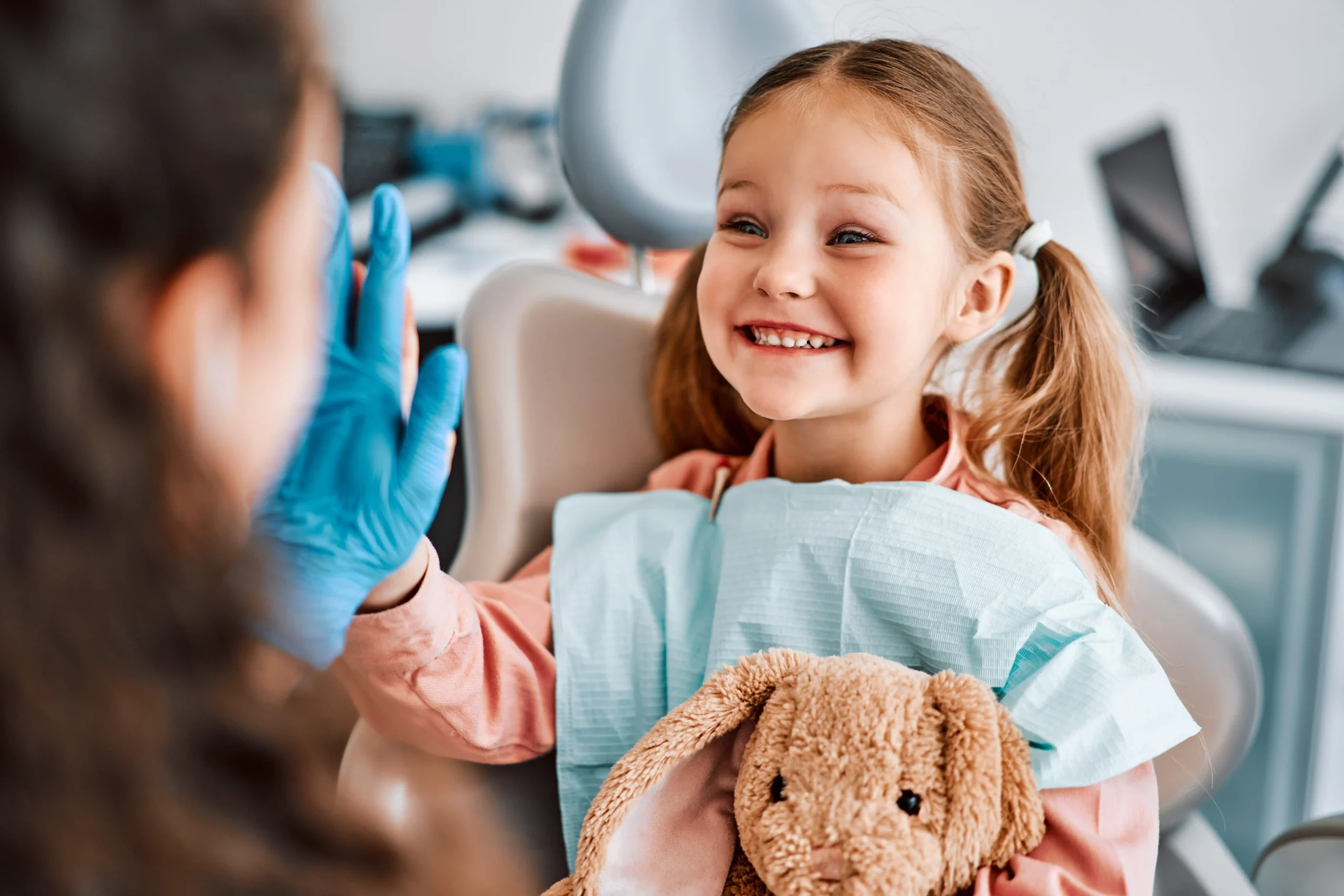
Teeth monitoring, hygiene and caries risk.
The consultation is adapted to each stage of growth and development.
Prevention and treatment according to diagnosis.
Communication and management according to age, anxiety and cooperation.
Pediatric Dentistry is the area of dentistry dedicated to taking care of oral health from the first teeth to adolescence.
It includes prevention of caries, evaluation of growth and dental eruption, restorative treatments, care of certain traumas, orientation to parents and caregivers and communication strategies adapted to the child. It also allows to detect early alterations that may require subsequent care of Orthodontics, Endodontics, Surgery or other specialties.
Dental care can begin during the first year of life, ideally since the first tooth appeared.
It is not necessary to wait for the child to have pain or a cavity to perform his first evaluation.
A first visit allows:
Prevention from an early age allows dental development to be accompanied and problems to be detected before they become more complex.
Until what age does pediatric dentistry provide care?
 Before indicating endodontics, it is necessary to determine the origin of the problem and evaluate the condition of the tooth.
The evaluation may include:
In certain cases it may be necessary to use three-dimensional images, such as CBCT CBCT scan, when they provide additional information relevant to diagnosis or planning.
CT scan is not routinely necessary for all endodontics patients.
After analyzing the findings, the patient is explained the diagnosis, the alternatives available and the recommended treatment.
An evaluation may be recommended if:
Prevention is one of the most important areas of pediatric dentistry.
The aim is not to perform the same procedure at each visit, but to identify what each child needs according to his age, oral health and individual risk.
During the checks, the following may be reviewed:
-Caries.
-Gums.
-Higiene.
-Tooth eruption.
-Development of dentition.
-Bitten.
-Oral habits.
-Existing restorations.
-Risk factors.
There is no identical frequency for everyone.
The interval between controls depends on factors such as the risk of caries, hygiene, age, development, history and treatments performed.
After evaluating your child we will be able to tell you how often it is advisable to carry out your checks.
During the controls we evaluate oral hygiene and perform dental cleaning or prophylaxis when indicated.
Not all children need professional cleaning at each consultation.
The recommendation depends on the state of hygiene, plaque accumulation, individual risk and evaluation findings.
Professional fluoride can be used as part of a strategy to prevent or control caries. Its application depends on the individual risk of the child and does not have to be carried out on all visits.
Sealants are materials that are placed on certain jaws and cracks of molars to help protect areas where plaque can accumulate and caries develop. They can be used in certain temporary or permanent molars when there is an appropriate indication.
Milk teeth may also develop cavities and need treatment.
That a temporary tooth is to be replaced in the future does not mean that a cavity should be ignored.
The treatment decision depends on factors such as:
Therefore, not all childhood cavities are treated in the same way.
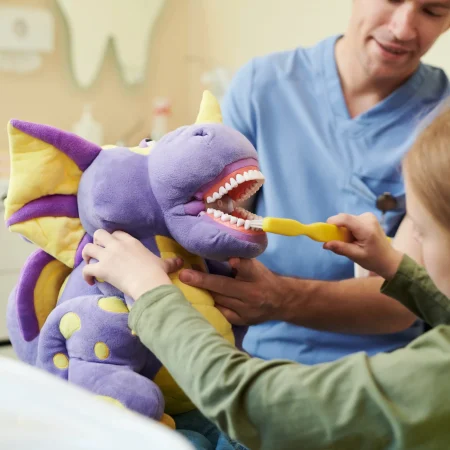
When a tooth decay or trauma causes loss of dental structure, it may be necessary to restore the tooth.
Treatment depends on the size of the injury, its location, and the condition of the tooth.
Depending on the case, the following may be used:
The evaluation makes it possible to determine which alternative is suitable for each tooth.
When a deep cavity or trauma affects the pulp — the inner tissue of the tooth — pulp treatment may be necessary.
Octopotomy is a procedure that can be used on certain teeth when the part of the pulp inside the crown is affected and conditions allow the rest of the pulp tissue to be preserved compatible with treatment.
Pulpectomy is used in certain cases when the pulp involvement is more extensive and it is necessary to remove the compromised pulp tissue inside the tooth.
The indication of octopotomy or pulpectomy depends on the diagnosis; not all deep cavities need the same treatment.
Blows in the mouth are frequent during childhood, but a dental trauma should always be evaluated according to the type of injury and the affected tooth.
The consultation can assess situations such as:
An important point is that trauma to permanent teeth and milk teeth is not handled the same way.
If your child has hit a tooth, ask for an evaluation to determine the type of injury and the next steps.
Some childhood dental problems may require surgical evaluation.
Procedures that may most often require evaluation in pediatric dentistry include:
The need for a procedure depends on the age, dental development, diagnosis and complexity of the case.
When treatment exceeds usual dental management, it may be coordinated with Oral or Maxillofacial Surgery.
Fear or dental anxiety are situations that should be taken into account during child care.
A young child, a patient who has had a difficult dental experience, or someone who needs a more complex procedure may require a different approach.
Care can be adapted by considering:
Management strategies may include:
The goal is not simply to get the child “to be taken care of”, but to help him or her receive the necessary treatment and develop a more positive relationship with dental care.
Some children may need additional support for certain dental treatments.
Sedation can be evaluated, for example, in patients with:
Not all children need or are candidates for sedation.
Factors such as:
Sedation should not be used simply as a substitute for proper evaluation and behavior management.
Each child has different needs.
In patients with medical, physical, cognitive, sensory or developmental conditions, the case is first evaluated to determine how to adapt dental care.
This may include children with conditions such as:
Depending on the patient, adjustments may be necessary in:
Not all conditions can be handled in the same way, nor can all patients receive any procedure within a conventional dental office.
Therefore, each case is evaluated individually.
During growth, alterations such as:
Detecting an alteration does not automatically mean that the child should start Orthodontics at that time.
The need and timing depend on the diagnosis and the stage of development.
When appropriate, the case can be coordinated with the Orthodontics service in Panama of Clínica Dental Champsaur.
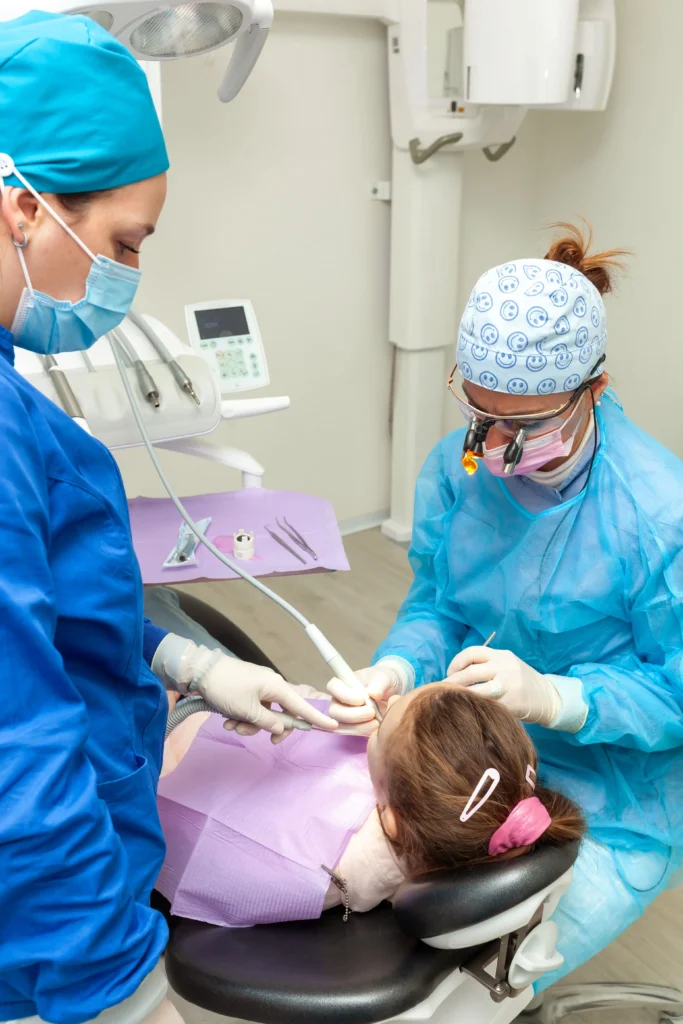

Clínica Dental Champsaur cuenta con más de 50 años de trayectoria en Panamá y un modelo de atención que integra odontólogos y diferentes especialidades dentro de una misma clínica.
Si durante una consulta infantil se detecta una necesidad adicional, puede coordinarse la evaluación con el área correspondiente.
The first visit can be made during the first year of life, ideally since the appearance of the first tooth.
Early care makes it possible to review development, guide parents and establish preventive measures from the outset.
Because temporary teeth can develop cavities, pain, or infection and perform important functions while remaining in the mouth.
Treatment depends on the condition of the tooth, age of the child and approximate time until its natural replacement.
It depends on the risk of cavities, hygiene, age, development and history.
A six-month interval may be frequent, but it is not a universal rule for all children.
Not necessarily.
First, their hygiene and oral health are evaluated to determine what preventive measures they need.
You should request an evaluation to determine what type of injury you suffered.
Management depends on whether the tooth is temporary or permanent and whether there is a fracture, displacement, mobility or loss of the tooth
Care can be adapted through age-appropriate communication, progressive explanation, positive reinforcement and other management strategies.
The form of care depends on the level of anxiety, age, previous experiences and procedure required.
No.
Sedation is considered only when there is an indication after evaluating age, medical history, behavior, anxiety, clinical needs and alternatives available.
These patients should be evaluated individually.
Medical, physical, cognitive or behavioral needs may require changes in communication, length of consultation, behavior management, coordination with other professionals, or sedation assessment.
The aim is to determine the appropriate way to provide care according to the specific needs of each child.
El objetivo es determinar la forma adecuada de realizar la atención según las necesidades específicas de cada niño.
There is no single age.
Some alterations may benefit from intervention during growth, while others require only observation or treatment at a later stage.
The decision must be based on the diagnosis and development of the child.

