Digital dentistry in Panama integrates technological tools into the diagnosis, registration, planning and execution of certain dental treatments.
At Clínica Dental Champsaur, we use technologies such as intraoral scanning, digital radiography, clinical photography and CAD-CAM CEREC systems that add value to the treatment indicated.
The technology does not replace the dentist’s evaluation. First, it determines what the patient needs and then which digital tools can be incorporated into his or her case.
Do you need a restoration, rehabilitation or treatment that can benefit from a digital flow?
Obtaining three-dimensional models of teeth and arcades.
Visual information to study and organize certain treatments.
Digital design of certain dental restorations.
Possibility of milling certain restorations within Clínica Dental Champsaur.
Digital dentistry is not a specific treatment.
It is the integration of different digital tools within dental care to capture information, support diagnosis, plan treatments, design restorations and, in certain cases, manufacture them digitally.
It can be used in different areas of dentistry according to the needs of each patient.
For example, an intraoral scan can be used to record teeth before making a restoration, while a digital X-ray can provide diagnostic information in another type of treatment.
The technology is selected after diagnosis and according to the procedure that each patient needs.

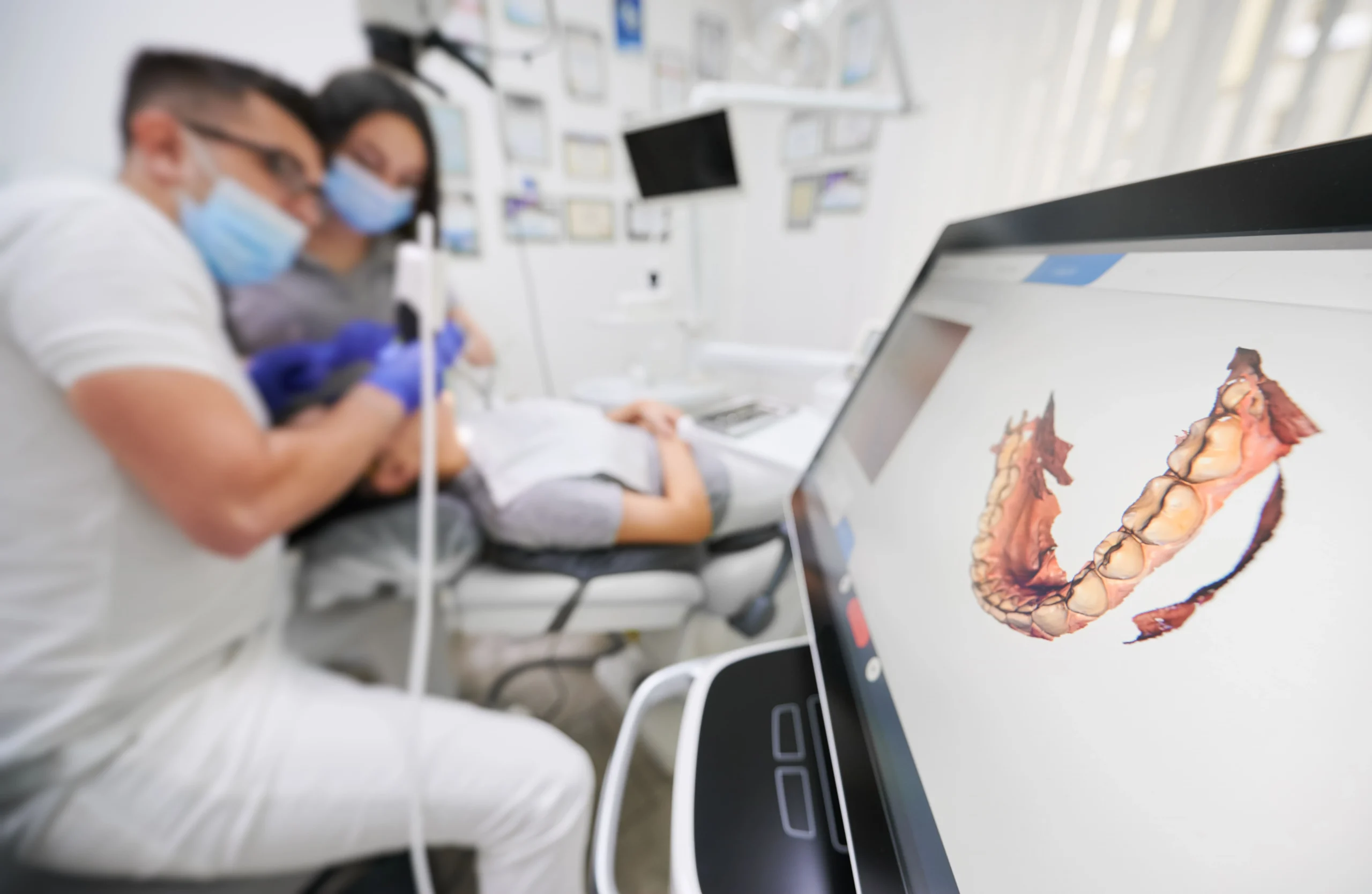
Clínica Dental Champsaur uses the Sirona Omnicam CEREC for certain intraoral scans.
The scanner allows a three-dimensional digital representation of the teeth and visible structures of the mouth.
Can be used for:
In some procedures, digital scanning can replace conventional prints made with buckets and printing materials.
This may be particularly convenient for patients who find it uncomfortable to take certain traditional impressions.
CEREC is a digital dentistry system that allows the integration of different stages of a restorative treatment.
A CEREC flow can combine:
Scanning → digital design → manufacturing → clinical test → placement
The term CAD-CAM describes two parts of this process:
CAD — Computer-Aided Design Computer-assisted design.
CAM — Computer-Aided Manufacturing Computer-assisted manufacturing.
After scanning, certain restorations can be digitally designed considering aspects such as shape, anatomy, contacts with neighboring teeth, bite and contours.
Technology helps the professional during the process, but clinical design and decisions continue to depend on the dentist.
Clínica Dental Champsaur has a Sirona milling unit integrated with certain flows of digital restorative dentistry.
When the type of restoration and the material are compatible with the system used, the digital design can be sent to the milling unit to manufacture the restoration within the clinic.
This reduces certain external stages within some treatments, although it does not mean that all restorations can or should be manufactured in this way.
Digital X-ray allows for images that can be viewed and used to support the diagnosis and planning of different treatments.
Not all patients need X-rays or should be performed automatically.
Their indication depends on clinical examination, history, symptoms, and specific treatment needs.
Dental photography is also part of the digital resources available in the clinic.
- It can be used to:
- Document the initial condition.
- Register teeth and smile.
- Compare changes during a treatment.
- Support planning.
- Facilitate communication between professionals.
- Explain certain aspects of treatment to the patient.
The technology used depends on the treatment, but a digital flow can be developed as follows:
The process begins by identifying which problem needs to be treated.
Dental and periodontal health, existing restorations, bite and any other necessary aspect are reviewed as the case may be.
After diagnosis, the dentist determines which technology can bring value.
It can include:
- Digital X-ray.
- Clinical Photography.
- Intraoral Scanning.
- CAD Design.
CAM Manufacturing.
Not all cases need to use all these tools.
The necessary records are obtained.
In a restorative treatment, for example, the intraoral scanner can digitally record teeth and bite.
The information collected is used to study the treatment.
When it comes to CAD-CAM restoration, the anatomy of the new restoration can be digitally designed.
If the restoration is compatible with the flow available in the clinic, the design can be sent to the milling unit.
That a restoration has been digitally designed does not eliminate the need to review it clinically.
The dentist checks aspects such as:
- Adaptation.
- Contacts.
- Bite.
- Shape.
- Function.
- Aesthetic.
When necessary, adjustments are made before placing the restoration or continuing the next phase of treatment.
Subsequent controls depend on the treatment performed and not on the fact that digital technology has been used.
One of the main applications of digital dentistry at Clínica Dental Champsaur is the CAD-CAM CEREC restorative flow.
Depending on the case, it can be used for certain:
It does not mean that all these restorations must be digitally performed.
The type of treatment depends on the conditions of the tooth, the necessary restoration and the criteria of the professional.
In certain cases, yes.
When tooth conditions and restoration are compatible with the CEREC flow, it may be possible to:
This allows certain crowns or restorations to be completed during a single visit.
However, not all crowns are candidates.
The possibility depends on the type of restoration, material, dental preparation, complexity of the case, periodontal state and need for other procedures.
Digital tools can bring different benefits depending on the treatment.
Intraoral scanning can replace some conventional prints and allows you to create digital models of teeth and arcades.
Digital images and models help the professional study the case and can facilitate the patient’s understanding of its treatment.
CAD software allows to design certain restorations from the information obtained by scanning.
The milling unit allows to manufacture certain restorations compatible with the available flow.
Digital records can facilitate the exchange of information between team members involved in a treatment.
When scanning, designing, and manufacturing can be done within the clinic, certain treatments may require fewer external stages.
Digital technology is integrated into different areas of Clínica Dental Champsaur.
Can be used for scanning and design of certain:
You can use tools such as:
Certain treatments can integrate digital logs, arcade scanning, and virtual models to support planning.
Digital records can be part of prosthetic planning and the design of implant restorations.

Clínica Dental Champsaur integrates digital technology into a multidisciplinary dental care model.
The clinic has more than 50 years of experience in Panama and brings together general dentists and specialists in different areas along with digital tools to support diagnosis, planning and certain treatments.
Confirmed technologies include:
No.
Digital dentistry is the integration of technological tools within different dental treatments.
It first determines what the patient needs and then what digital tools can be used to support that treatment.
Clínica Dental Champsaur uses the Sirona Omnicam CEREC for certain intraoral scans.
It is a device that digitally records the teeth and visible structures of the mouth to generate a three-dimensional representation.
It can be used to create digital models, design certain restorations and support different treatments.
Scanning for itself does not routinely require anesthesia.
It is used to digitally record visible teeth and structures without performing a surgical procedure.
CEREC is a CAD-CAM system that can be used to scan, design and manufacture certain restorations within a digital stream.
Clínica Dental Champsaur has CEREC technology and a Sirona milling unit.
CAD means computer-assisted design.
CAM means computer-assisted manufacturing.
In dentistry, this technology allows to design certain restorations digitally and then manufacture them using compatible equipment.
In certain cases, yes.
When clinical conditions and type of restoration are compatible with the CEREC flow, it may be possible to scan, design, manufacture and place a restoration on a single visit.
Not all crowns are candidates for this procedure.
No.
The technique is selected according to the needs of the tooth, the type of restoration and the criteria of the professional.
Not necessarily.
You can request an evaluation for the problem or treatment you need.
Our team will determine after the diagnosis which digital tools can add value to your case.

